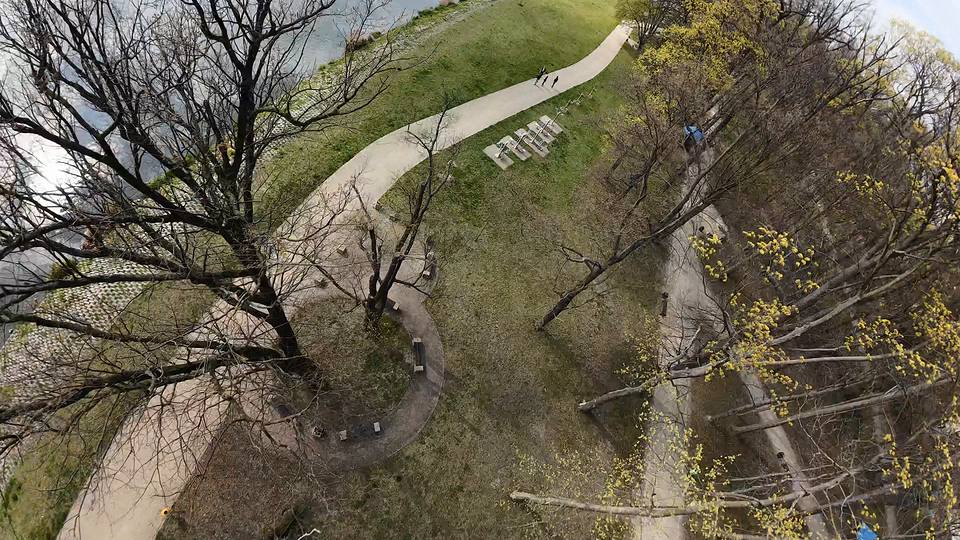
Opole from above — guided 360° films with captions
6 films · 42 min in total · 8K 60 fps · every word on screen
 Author: Andrii Shramko
What you will see in the films
Each place has its own film — choose one to watch it.
- Pasieka Island and the MłynówkaThe Penny Bridge, Domek Lodowy, the Piast Tower and the pond where a teenage girl became German figure-skating champion.
- Ostrówek, the Market Square and the town hallThe monastery from which Poland was called to fight the Swedes, and a Nike monument built in a few weeks.
- The cathedral and the Piast BridgeA castle that left nothing behind but its tower — the people of old Oppeln nicknamed it “the asparagus”.
- The cathedral, St Sebastian's Church and ZaodrzeThe river that spared the Old Town — and the story of the flood of the millennium.
- University Hill and Copernicus SquareThe church “on the Hill” (na Górce), the Museum of Opole Silesia and the secret of the room beneath the Nike monument.
- Olga “Kora” Sipowicz Square and the stationThe capital of Polish song: the words on a rooftop by the station, the Main Post Office and festival anecdotes.
Films
Each film is one guided flight. The guide speaks English (a synthetic voice) and every word is on screen, so you can also watch with the sound off.
 360°Open captions
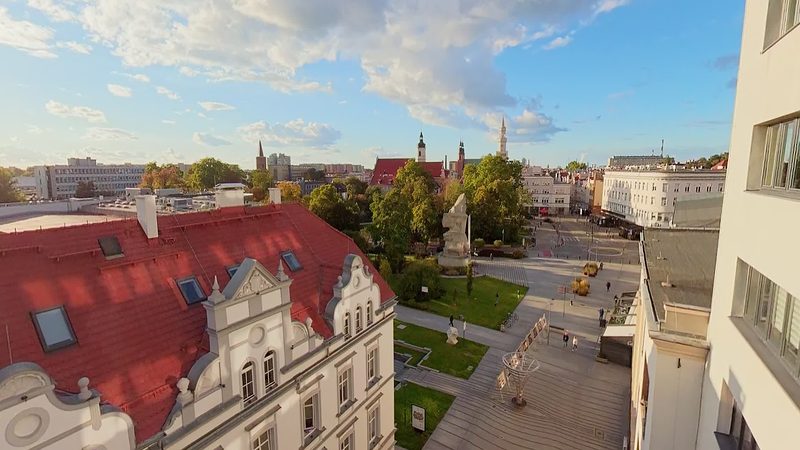
The Town That Kept Its Polish Voice
The island where Opole began, the philharmonic hall, the Nike monument and a cathedral with a Piast chapel.
 360°Open captions
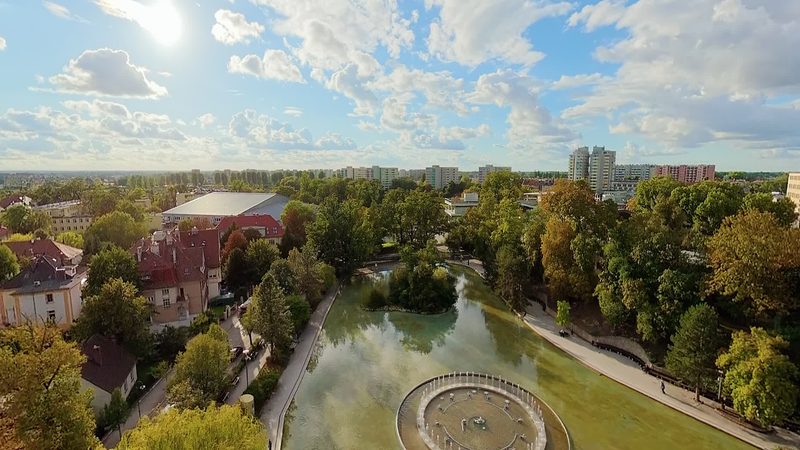
The Island Where Opole Began
An island between the Oder and the Młynówka: the Penny Bridge, the Piast Tower, Domek Lodowy and the amphitheatre stage.
 360°Open captions
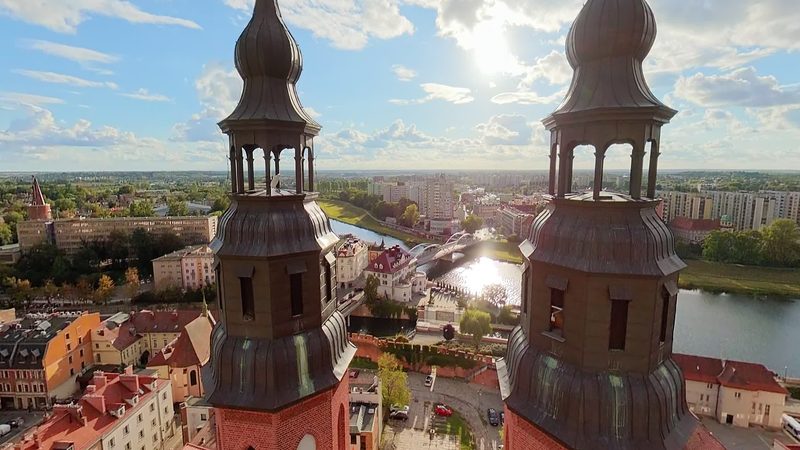
The River That Spared the Old Town
A red-brick cathedral with twin towers, the little church of St Sebastian and the Oder that flooded Zaodrze.
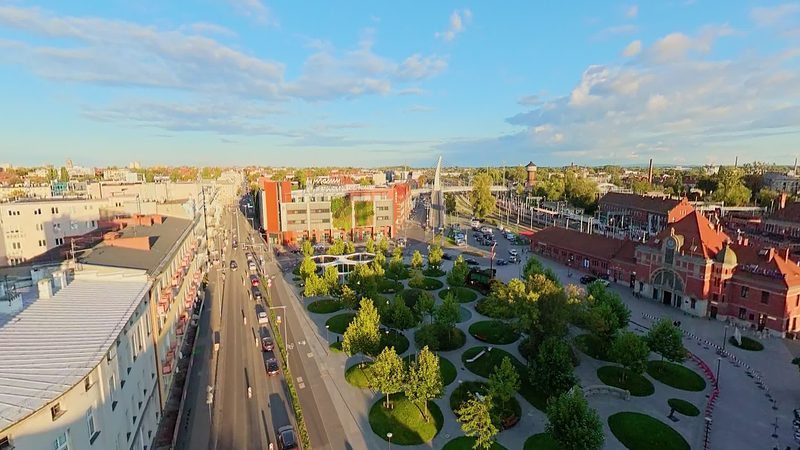 360°Open captions
The Capital of Polish Song
Kora Square by the station, the white Main Post Office with its round tower and the sign about the capital of Polish song.
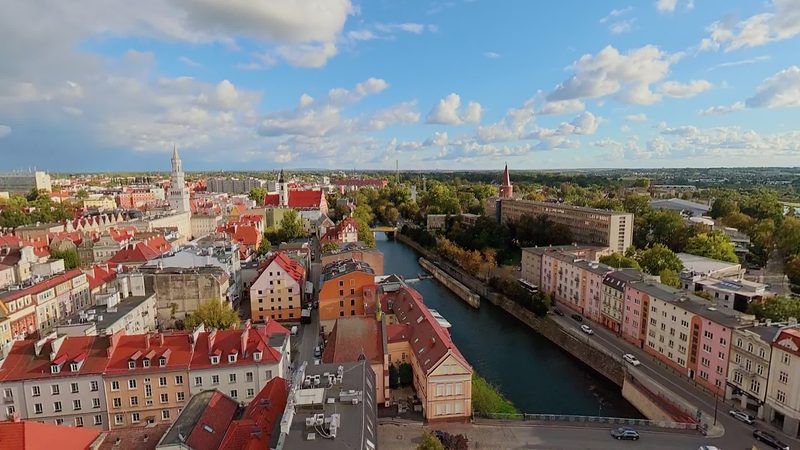 360°Open captions
The Castle That Left a Tower
The tower left from the Piast castle, the Yellow Footbridge over the Młynówka, the town hall and a butterfly fountain.
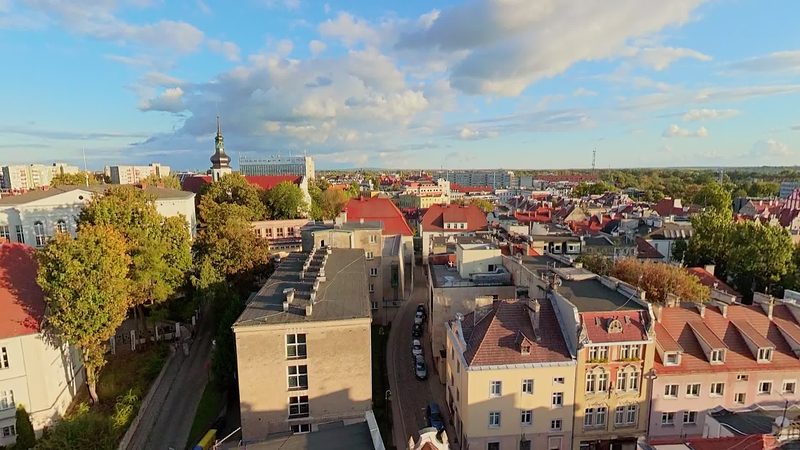 360°Open captions
The Hill That Kept Changing Hands
Copernicus Square with its fountain, the church "na Górce", the Museum of Opole Silesia and the Nike monument.
How to watch
On a phone: swipe across the picture or turn the phone itself — it works best in the YouTube app.
On a computer: drag the picture with the mouse to look around.
In a VR headset: open the film in DeoVR or YouTube VR.
Why visit Opole
Opole began on an island. On Ostrówek, on Pasieka Island between the Oder and the Młynówka channel, stood the castle of the Piasts; when it was being pulled down from 1928 onwards, Polish protests saved the Piast Tower. The people of old Oppeln nicknamed it “Proskespargel” — the asparagus.Piast Tower, Opole — Polish Wikipedia
Pasieka is a walk along the Młynówka, across the Penny Bridge (Most Groszowy) and past Domek Lodowy. On the pond here, the future Olympic champion Maxi Herber won the German figure-skating championship as a teenager.
Opole is the capital of Polish song — Jerzy Waldorff called it that at the very first festival, and today the words stand on a rooftop by the railway station. The stage of the Millennium Amphitheatre was finished the day before the festival opened.Millennium Amphitheatre, Opole — Polish WikipediaNational Festival of Polish Song in Opole — Polish Wikipedia
The Oder can be dangerous here: in 1997, during the flood of the millennium, the army blew up the embankments and flooded Zaodrze to save the Old Town.The flood of the millennium — Polish Wikipedia
In the Market Square, listen for the bugle call from the town hall tower — it is played every day. In Holy Trinity Church, in the crypt beneath the high altar, lies Elżbieta Świdnicka, a granddaughter of King Władysław Łokietek, and under the Nike monument there is a room with shelves that were meant to hold urns with the ashes of the Silesian insurgents.
Films about Opole have been watched 1,000+ times on YouTube and DeoVR. YouTube + DeoVR, public counters, as of 29 October 2026. Only the films of this series about Opole.
How we count
We add up the public view counters of YouTube and DeoVR — views are events, so they can be summed. We never add up subscribers or the number of films, because the same film is on both platforms. Hours watched are shown only when a platform has reported them, never worked out from film lengths. Facebook is not included. Numbers are rounded down and refreshed once a month.
- YouTube: 200+ (views of the films about Opole, 29 October 2026)
- DeoVR: 700+ (views of the films about Opole, 29 October 2026)
YouTube + DeoVR, public counters, as of 29 October 2026
Questions
Is there a 360° video tour of Opole with subtitles?
Yes — 6 films. Each one has captions burned into the picture: every word of the guide is on screen, in three places around you, so you can watch without sound. The captions and the narration are in English.
What does Opole look like from above?
From above you can see that Opole stands on the Oder and the Młynówka: Pasieka Island with the Piast Tower and the Millennium Amphitheatre, the Old Town with the cathedral, the Market Square and the town hall, University Hill and the square by Opole Główne station.
Where can I watch a virtual tour of Opole in VR?
In the DeoVR app or in YouTube VR — every film has a DeoVR link. On a phone, the YouTube app is enough: turn the phone or swipe across the picture.
What is there to see in Opole?
The Piast Tower and Pasieka with the Młynówka and the Penny Bridge, the Millennium Amphitheatre, the Cathedral of the Exaltation of the Holy Cross, the Market Square with its town hall and bugle call, Holy Trinity Church, and University Hill with the church “on the Hill” and the Nike monument.
Who films Opole with a 360° drone?
Andrii Shramko, an engineer and filmmaker who lives in Bydgoszcz. The series is his independent initiative — not a city hall publication.
Andrii Shramko
Engineer and filmmaker, living in Bydgoszcz. I have been filming 360° in motion since 2015.
What you can check
- My 3D scan illustrates the NVIDIA Omniverse documentation, credited to Andrii Shramko
- World Labs: my scene “Poland”, 106 million splats — the largest in their Spark 2.0 article
- “Touching the Sky” — a VR film by Red Bull × Meta, 2025 (making-of on Red Bull TV)
- Immersive Warsaw 2026: speaker, “The Camera Doesn't Exist Yet”, 5 November 2026, Kinoteka
- Lublin's Old Town as a 3D scene: 259 million splats, 13 levels of detail — the largest scene on my profile
- ShramkoGSFPV: a drone simulator in the browser, flying over real 3D scans — open source
I almost always work with a team — that is why I write “we”. We will agree how to work together when we meet.